|
Beep beep, I'm a human. I am the Founder and CEO of Synheart, a research-driven lab and startup, and a Co-Founder of Chapa, one of Ethiopia's leading financial technology companies. Before founding and scaling Chapa, I worked with Prof. Yoshua Bengio's MILA lab, collaborating with Dr. Kris Sankaran and Prof. Yoshua Bengio on problems related to Humanitarian AI. I continue to actively collaborate with MILA, bridging foundational research with real-world systems. At Chapa, I designed and led the development of mission-critical financial infrastructure—payment processing, payouts, fraud detection, internal ledgers, and merchant tooling. These systems process millions of transactions annually, support tens of thousands of merchants, and operate at national scale with strict reliability and correctness requirements. My work there spans distributed systems, data infrastructure, API design, reliability engineering, and applied machine learning, contributing to Chapa's growth to 70+ employees and its role as a foundational component of Ethiopia's digital economy. At Synheart, I lead a growing team of 10+ engineers and researchers working across machine learning, neuroscience-inspired modeling, systems engineering, and edge/on-device computing. Synheart operates as a lab-startup focused on building the foundations of Human State Interface (HSI)—tools and infrastructure that enable software to understand and respond to human cognitive and physiological signals. I believe the next generation of computing must be grounded in heart–brain coherence, where physiological signals such as heart rate variability, neural patterns, and behavior inform adaptive, human-aware systems. Under this vision, Synheart is building privacy-first, local-first tools that allow modern applications and AI systems to serve humans more intelligently, safely, and empathetically. I remain deeply hands-on: writing and reviewing code, designing system architectures, studying neuroscience and human cognition, and open-sourcing core components of my work. I hold global patents, have published research, received multiple awards, and actively mentor engineers and researchers. Email / Google Scholar / Github / Projects |

|
|
My work spans distributed systems, data infrastructure, API design, reliability engineering, and applied machine learning. I'm focused on Human State Interface (HSI)—building tools and infrastructure that let software understand and respond to human cognitive and physiological signals. I'm interested in neuroscience-inspired modeling, edge/on-device computing, and privacy-first, local-first systems that support heart–brain coherence and human-aware AI. I sporadically share updates on my Twitter, and many of my projects are on my Github. |
|
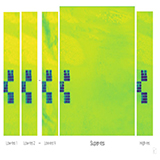
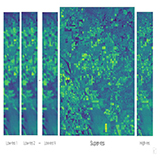
Michel Deudon* , Alfredo Kalaitzis*, Md Rifat Arefin, Israel Goytom, Kris Sankaran, Zhichao Lin, Vincent Michalski, Samira E. Kahou, Julien Cornebise, Yoshua Bengio Submitted to ICLR, 2020 code / amazing blog We introduce HighRes-Net, a recursive neural network for MFSR, as well as shiftNet-Lanczos, a neural network for image registration. We discuss our cooperative learning setting and compare our results to state-of-the-art Single-Image Super-Resolution (SISR) baselines on the European Space Agency's Kelvin competition |
|
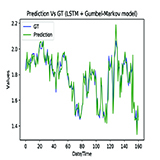
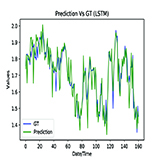
Israel Goytom, Kris Sankaran IWCI, 2019 code We propose an LSTM model with Gumbel-distributed errors, as one way to combine classical theory of extreme values with modern deep learning. |
|
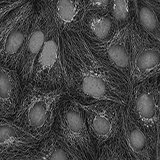
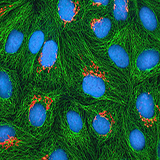
Israel Goytom, Qin Wang, Kris Sankaran, Dongdong Lin Submitted, 2019 code We introduce two artificial neural networks for grey microscopy image colorization: A convolutional neural network (CNN) with a pre-trained Inception ResNetV2 model for feature extraction. A Neural Style Transfer convolutional neural network (NST-CNN), which can colorize grey microscopy images with semantic information learned from a user-provided color image at inference time. |
|
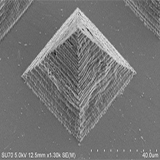
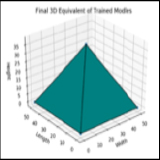
Israel Goytom, Gu Yinwei CSEIT, 2018 poster For 3D microstructures fabricated by two-photon polymerization, a practical approach of machine learning for detection and classification in their optical microscopic images is state and demonstrated in this paper. |
|
|
 |
Type 3D Axis Microscope (China Patent No. ZL 2018 2 0805917.2)
|
|
|
A device for detecting similar proportions between micro-structures on PVC (China Patent No. CN207036728U)
|